
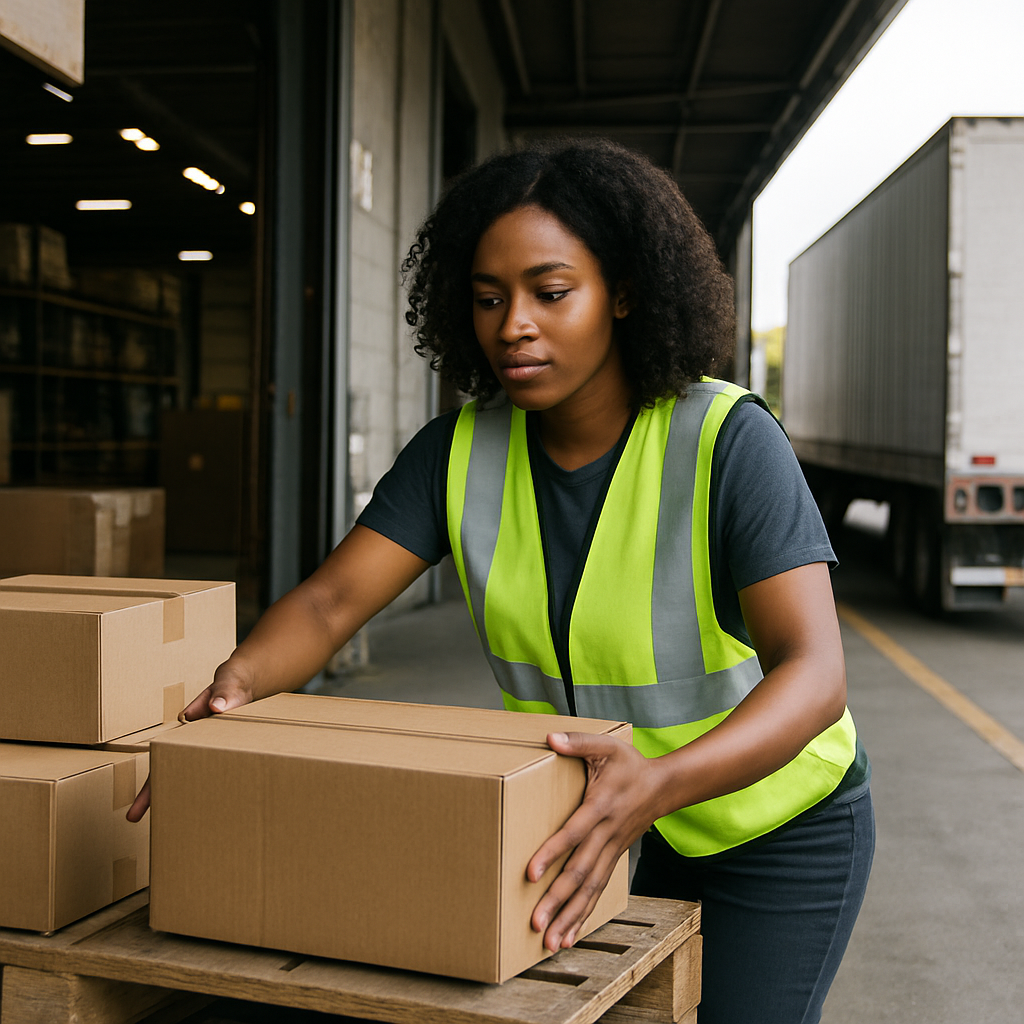
Safety is one of the most overlooked—and most expensive—failure points among lumper service companies.
While unloading freight may appear straightforward, dock environments are inherently high-risk. Heavy pallets, powered equipment, tight timelines, and inconsistent crews create conditions where even small lapses can lead to serious injuries, damaged product, or operational shutdowns.
The problem isn’t that lumper services are unsafe by nature.
The problem is how many providers treat safety as secondary to speed.
Most safety issues stem from the same root cause: lumpers are often treated as temporary labor rather than an integrated part of warehouse operations.
Common breakdowns include:
When crews change daily and accountability is unclear, safety becomes reactive instead of proactive.
Inbound docks combine several risk factors at once:
Without standardized processes, the dock becomes a place where shortcuts feel necessary—and incidents become inevitable.
When safety is neglected, the impact extends far beyond the immediate incident.
Warehouses often experience:
Ironically, the pursuit of faster unloading often results in more downtime, more cost, and more disruption.
The best lumper service companies treat safety as an operational system—not a checklist.
Key differences include:
High-performing providers require formal onboarding before associates ever step onto the dock, including:
This reduces variability and eliminates guesswork.
Effective lumper operations include supervisors who are:
Supervision changes safety from a policy into a daily practice.
Rather than letting each associate unload “their own way,” strong providers:
Consistency is one of the most powerful safety tools available.
High-performing operations understand that safe processes are faster processes.
When unloading follows a predictable, repeatable method:
Safety and productivity reinforce each other when managed correctly.
Many facilities evaluate lumper service companies primarily on:
Safety is often assumed—or addressed only after an incident.
A better approach is to treat safety as a leading indicator of operational maturity. Providers that invest in safety typically also deliver:
Before choosing a lumper service company, ask:
Clear answers signal a provider that takes the dock seriously.
Warehouses that prioritize safe unloading don’t just reduce risk—they gain operational stability.
Consistent, safety-first lumper operations lead to:
In today’s supply chain environment, reliability is as valuable as speed.
Many safety issues occur when lumper crews are treated as temporary labor instead of an integrated part of dock operations. Minimal onboarding, inconsistent supervision, high turnover, and pressure to unload quickly all increase risk.
Docks combine heavy equipment, tight spaces, manual freight handling, and strict appointment schedules. Without standardized unloading methods, congestion and shortcuts can lead to injuries and product damage.
Beyond injuries, poor safety can lead to downtime, workers’ compensation claims, higher insurance costs, product damage, OSHA scrutiny, and slower throughput after incidents.
High-performing providers invest in structured onboarding, on-site supervision, standardized work methods, and clear accountability. Safety is built into daily operations rather than treated as a checkbox.
Warehouses should ask about training requirements, on-site supervision, PPE standards, incident reporting, corrective action processes, and how often safety practices are reviewed.
No. When safety is integrated into standardized processes, unloading becomes more predictable and efficient, reducing congestion, rework, and disruptions.
Safety performance is often the clearest indicator of whether a lumper service company is simply unloading freight—or actively supporting your operation.
For a broader overview of how lumper service companies work, what they cost, and how to evaluate them holistically, read:
Lumper Service Companies: What They Are, How They Work, and How to Choose the Right One
👇📅 We're here to help. There's no pitch - just a conversation. 📅👇
If you need dependable support to reinforce your team and get you back on track, FHI NOW can help.

In any market, your supply chain can make or break your ability to compete well. Don't leave that to chance. We can help you create a stronger operation, so you never fall behind the competition.
Stop worrying about labor challenges and start enjoying a safe, lean, and rock-solid supply chain.
(800) 849-3132 | © FHI. All rights reserved.