

Warehouse labor challenges don’t usually start with hiring.
They start when experienced associates leave, productivity resets, and supervisors spend more time training new people than improving operations. Over time, turnover and inconsistent training quietly become two of the most expensive problems inside the warehouse.
This article explores how retention and training function as warehouse labor solutions—not as HR initiatives, but as operational strategies that reduce cost, improve productivity, and stabilize performance.
Every time an associate leaves, the operation absorbs hidden costs:
When turnover is high, warehouses often feel busy but underperforming. Training and retention are what convert labor hours into consistent output.
Turnover is rarely about one factor. It’s usually a combination of:
When associates feel set up to react instead of succeed, retention suffers—even in competitive labor markets.
Training gaps don’t always show up immediately.
Over time, poor training leads to:
Without structured training, productivity becomes dependent on a few key individuals rather than a repeatable system.
Strong training programs share a few characteristics:
The goal isn’t just faster ramp-up—it’s consistent performance across shifts and seasons.
When retention improves:
Retention isn’t about perks. It’s about creating an environment where associates can perform predictably without constant disruption.
Most warehouses understand the importance of training and retention—but struggle to execute consistently because:
In these environments, training becomes reactive, and retention suffers as a result.
Some operations address these challenges by partnering with a managed warehouse labor provider—not as a staffing solution, but as an operating model.
In a managed labor environment:
For companies like FHI, the focus is on owning the labor system—training, supervision, and performance—so warehouse leaders can focus on throughput, service, and growth without constantly rebuilding the workforce.
This approach isn’t about replacing internal teams. It’s about stabilizing labor as the operation evolves.
It may be time to rethink the model if:
These signals suggest the labor system—not the people—needs support.
Because every departure resets productivity and increases supervision and training demands.
Yes. Faster ramp-up and consistent performance reduce overtime, errors, and rework.
It’s an operations problem with financial and performance impact.
By creating structure, consistency, and accountability around training and supervision.
When labor instability limits growth or consumes operational focus.
👇📅 We're here to help. There's no pitch - just a conversation. 📅👇
If you need dependable support to reinforce your team and get you back on track, FHI NOW can help.

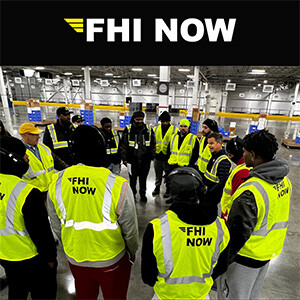
In any market, your supply chain can make or break your ability to compete well. Don't leave that to chance. We can help you create a stronger operation, so you never fall behind the competition.
Stop worrying about labor challenges and start enjoying a safe, lean, and rock-solid supply chain.
(800) 849-3132 | © FHI. All rights reserved.