

Workforce planning used to be a once-a-year exercise.
In today’s supply chain environment, that approach no longer works.
Between:
…workforce planning has become a strategic capability, not an administrative task.
As leaders look toward 2026, the question is no longer:
“How many people do we need?”
It’s:
“How do we build a workforce model that can adapt, scale, and perform consistently under pressure?”
This checklist outlines the critical workforce planning questions every distribution leader should be answering now — and where managed labor partners like FHI fit into a modern plan.
Many operations plan labor based on:
High-performing DCs plan based on:
Key questions:
Why it matters:
If labor planning is built on averages, you’ll always be behind during peaks.
Rigid labor models struggle in volatile environments.
Ask:
Managed labor introduces elasticity:
2026-ready operations design flexibility on purpose.
Coverage answers:
“Do we have enough people?”
Productivity answers:
“Can we hit throughput targets efficiently and consistently?”
Key checks:
Workforce planning that ignores productivity leads to:
Managed labor helps shift the conversation from hours to output.
Labor plans often ignore leadership bandwidth.
Ask honestly:
Without leadership capacity:
FHI’s embedded leadership model helps protect supervisory bandwidth and maintain execution discipline.
Turnover isn’t a surprise.
It’s a known variable.
Key planning questions:
Smart workforce plans:
Managed labor reduces volatility by stabilizing staffing and shortening ramp curves.
Fatigue is a workforce planning issue — not just a safety one.
Ask:
Chronic OT is often a signal of:
2026-ready plans prioritize sustainable pace, not heroics.
Automation doesn’t eliminate labor — it changes labor.
Ask:
Many automation projects underperform because labor wasn’t planned correctly.
Managed labor partners help:
Misalignment creates friction.
Ask:
Workforce planning works best when:
…are discussed together — not in silos.
Managed labor provides a common operating language across teams.
Ask yourself:
If the answer is:
“We’ll figure it out.”
That’s risk.
Strong plans include:
Managed labor becomes a built-in contingency, not a last-minute scramble.
Managed labor isn’t about replacing internal teams.
It’s about stabilizing and strengthening the system.
FHI supports workforce planning by:
In a 2026-ready model, managed labor is:
a strategic layer — not a reactionary fix.
Workforce planning for 2026 isn’t about predicting the future perfectly.
It’s about building a labor model that:
The most resilient distribution centers don’t ask:
“How do we survive the next surge?”
They ask:
“How do we design a workforce that performs no matter what comes next?”
That’s the difference between reacting — and leading.
Q1: What makes workforce planning different heading into 2026?
Greater volatility, tighter labor markets, automation complexity, and higher service expectations require more flexible labor models.
Q2: Why is flexibility so important in workforce planning?
Because volume and order profiles change faster than traditional hiring models can respond.
Q3: How does managed labor support workforce planning?
By providing scalable capacity, embedded leadership, and predictable productivity without overloading internal teams.
Q4: Should workforce planning focus more on productivity or headcount?
Productivity. Headcount without performance leads to higher costs and instability.
Q5: How often should workforce plans be revisited?
Continuously. High-performing organizations review labor assumptions quarterly — or faster in volatile environments.
👇📅 We're here to help. There's no pitch - just a conversation. 📅👇
If you need dependable support to reinforce your team and get you back on track, FHI NOW can help.

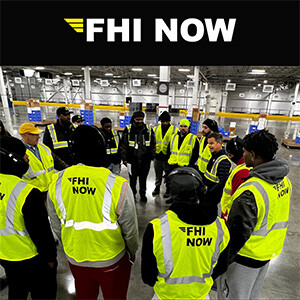
In any market, your supply chain can make or break your ability to compete well. Don't leave that to chance. We can help you create a stronger operation, so you never fall behind the competition.
Stop worrying about labor challenges and start enjoying a safe, lean, and rock-solid supply chain.
(800) 849-3132 | © FHI. All rights reserved.