

Overtime is often the first lever warehouses pull when demand increases.
It’s familiar. It’s fast. And on the surface, it looks simpler than bringing in outside labor. But for many operations, overtime quietly becomes the most expensive labor strategy — not because of the hourly rate, but because of everything that comes with it.
That’s why more warehouse leaders are asking a critical question:
Is contingency labor more cost-effective than overtime in warehouses?
The answer depends on how cost is defined — and how long overtime is relied upon as a solution.
When volumes spike or staffing gaps appear, overtime feels like the path of least resistance:
But overtime was never designed to be a long-term operating model.
When it stretches beyond short bursts, overtime introduces hidden costs that don’t always show up on a labor report — until performance starts slipping.
Overtime wages increase direct labor cost immediately. But wage premiums alone rarely tell the full story.
As overtime hours stack up:
Paying more for less output is not a sustainable equation.
Tired associates move slower, make more mistakes, and require more supervision.
Over time, this leads to:
What looks like “extra capacity” on paper often results in diminishing returns on the floor.
Extended overtime accelerates burnout — especially in physically demanding warehouse roles.
Turnover creates additional downstream costs:
Replacing experienced associates is far more expensive than most overtime calculations account for.
Contingency labor teams are designed to address volume and labor gaps without overloading core teams.
Instead of stretching the same workforce thinner, contingency labor adds capacity in a controlled, scalable way.
Key differences include:
The result is often greater total output at a lower operational risk, even if the hourly rate appears comparable at first glance.
Contingency labor programs are typically scoped, scheduled, and aligned to workload — not reactive.
This allows operations leaders to:
Predictability matters as much as price.
Unlike overtime-driven labor models, contingency teams are deployed specifically to maintain throughput.
When managed correctly, contingency labor helps:
Cost per unit moved often tells a very different story than cost per hour.
The goal isn’t to eliminate overtime entirely.
The goal is to use overtime intentionally, not as a crutch.
Contingency labor allows overtime to return to its original purpose:
That balance is where cost efficiency lives.
Overtime isn’t inherently bad — it’s just commonly overused.
Overtime can still be effective when:
The problem arises when overtime becomes the default response to ongoing labor variability.
So, is contingency labor more cost-effective than overtime in warehouses?
In many cases, yes — not because the hourly rate is lower, but because:
For warehouses facing sustained variability, contingency labor often proves to be the smarter long-term financial decision.
While hourly rates may be similar, contingency labor often reduces total costs by improving productivity, reducing fatigue, and lowering turnover.
Extended overtime leads to fatigue, which slows work pace, increases errors, and raises safety risks.
When overtime becomes frequent or sustained, it’s often a sign that additional labor capacity — such as contingency labor — is needed.
No. Overtime still has value for short-term or special situations. Contingency labor helps prevent overtime from becoming excessive.
The most accurate comparison looks at cost per unit moved, service levels, safety performance, and turnover — not just hourly wages.
👇📅 We're here to help. There's no pitch - just a conversation. 📅👇
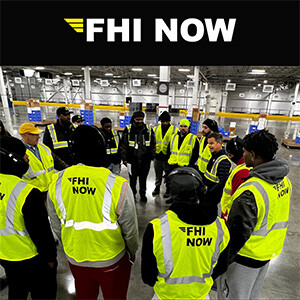
If you need dependable support to reinforce your team and get you back on track, FHI NOW can help.

In any market, your supply chain can make or break your ability to compete well. Don't leave that to chance. We can help you create a stronger operation, so you never fall behind the competition.
Stop worrying about labor challenges and start enjoying a safe, lean, and rock-solid supply chain.
(800) 849-3132 | © FHI. All rights reserved.