

For apparel and direct-to-consumer (DTC) brands, growth is rarely linear.
A new influencer partnership hits.
A seasonal drop sells out in hours.
Returns spike overnight.
Customer expectations reset instantly.
And suddenly, fulfillment becomes the bottleneck — not demand.
Clothing and apparel brands don’t fail because of product or marketing.
They struggle when warehouse operations can’t keep up with volatility.
This article answers the most common questions apparel and DTC leaders are asking — and explains how a managed labor partner like FHI fits naturally into a scalable fulfillment model.
Short answer: variability.
Apparel fulfillment combines:
Unlike pallet-in/pallet-out operations, apparel warehouses live in a world of:
This makes labor performance — not automation alone — the critical success factor.
Because growth creates operational whiplash.
Common pain points include:
DTC growth is fast — but fulfillment systems often aren’t designed to flex that fast.
Because headcount ≠ throughput.
For apparel operations:
Hiring without structure often increases cost without increasing output.
Managed labor works when it’s embedded into the operation, not layered on top of chaos.
In apparel environments, FHI-style managed labor provides:
Instead of asking:
“How many people do we need?”
Apparel brands begin asking:
“How much throughput do we need — and how do we protect it?”
Yes — this is where managed labor excels.
During drops, flash sales, or influencer campaigns:
With managed labor:
FHI helps apparel brands plan for volatility instead of reacting to it.
Returns are the hidden cost center of apparel fulfillment.
Challenges include:
Managed labor supports reverse logistics by:
For apparel brands, faster returns processing directly improves inventory availability and cash flow.
Apparel fulfillment isn’t just logistics — it’s brand delivery.
FHI embeds:
When labor execution improves, customer experience improves automatically.
Beyond basic pick rates, apparel and DTC brands should track:
Managed labor allows brands to see and control these metrics in real time, not after damage is done.
Strong signals include:
Rapid DTC growth
Frequent promotions or product drops
High returns volume
Labor instability
Rising fulfillment cost per order
Customer complaints tied to shipping errors or delays
Supervisors constantly in reactive mode
Managed labor isn’t a last resort — it’s a scaling strategy for brands that expect volatility.
FHI’s approach is built for apparel environments:
On-site leadership embedded into daily operations
Collaborative planning with operations and finance
Gradual onboarding aligned to workflows
Performance-based accountability
Flexibility to scale with brand growth
Transparency into productivity and cost metrics
The goal isn’t to replace your team — it’s to stabilize, scale, and elevate performance.
For apparel and DTC brands, fulfillment is no longer a back-end function.
It’s a competitive differentiator.
Growth without operational stability leads to:
Managed labor allows apparel brands to:
For brands navigating unpredictable demand, FHI becomes part of the operating model, not just a staffing solution.
👇📅 We're here to help. There's no pitch - just a conversation. 📅👇
If you need dependable support to reinforce your team and get you back on track, FHI NOW can help.

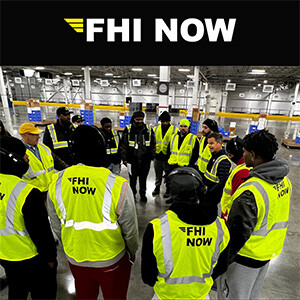
In any market, your supply chain can make or break your ability to compete well. Don't leave that to chance. We can help you create a stronger operation, so you never fall behind the competition.
Stop worrying about labor challenges and start enjoying a safe, lean, and rock-solid supply chain.
(800) 849-3132 | © FHI. All rights reserved.