
Dollar stores have a reputation for stubborn growth even in a bad economy. In the 2008 economic crash, they outperformed the rest of the economy. However, we’re now facing a different kind of economic challenge. Inflation, labor shortages, and consumer uncertainty have led to supply chain efficiency problems, tight margins, poor sales, and mass closures.
Today, the most important way dollar store chains can stay afloat is to cut costs while improving efficiency. However, many cost-saving measures like automation have high up-front costs and take time to implement. Dollar stores can improve their margins starting today by turning to FHI’s on-demand labor for supply chains. This solves problems like training costs, safety issues, staffing-related delays, and damage to merchandise, improving margins immediately.
Supply Chain Challenges Facing Dollar Store Chains
Dollar stores traditionally flourish in a troubled economy by retaining their traditional customers while gaining new ones. They thrive at selling priced-down essentials and basic items with low overhead costs, but that’s not as easy as it used to be. High inflation in food and transport aren’t driving middle-income customers their way and forcing their core customers to tighten their belts.
Simply put, today’s economy isn’t friendly to dollar stores’ bottom line. Some dollar stores have implemented novel strategies to increase revenue, but these measures only go so far. Combining new strategies with business fundamentals such as optimizing supply chain efficiency is necessary.
How Dollar Stores Are Handling a Difficult Economy
In general, dollar stores have focused on doing more with less to improve margins and keep their prices low. Any opportunity to reduce expenses, cut costs, or offer higher-ticket items affordably is important to cope with inflation. In one case, Dollar General has leveraged AI to improve its fresh produce offerings.
Dollar General’s Supply Chain Efficiency Initiative
While fresh produce is a profitable item for grocery and value chains, poorly optimized orders can result in produce wasting away on the shelves. That’s why Dollar General partnered with Shelf Engine, an outside inventory management company. The company implemented a complex algorithm that automates produce orders, increasing revenue and reducing product spoilage.
This is a good model for how dollar store chains can partner with outside companies to solve specific problems. Many dollar stores struggle with understaffed supply chains and inexperienced labor, which results in losses that are just as preventable as spoiled produce—which is why certain dollar store chains have also outsourced their labor. The solution: FHI’s on-demand labor is a near-immediate fix for any understaffed supply chain operation.
How to Strengthen Your Dollar Store’s Logistics
Supply chain efficiency is something dollar stores can’t afford to overlook in today’s economy. Reliable warehouse management, on-demand labor, and motivated distribution professionals are the solutions dollar stores need.
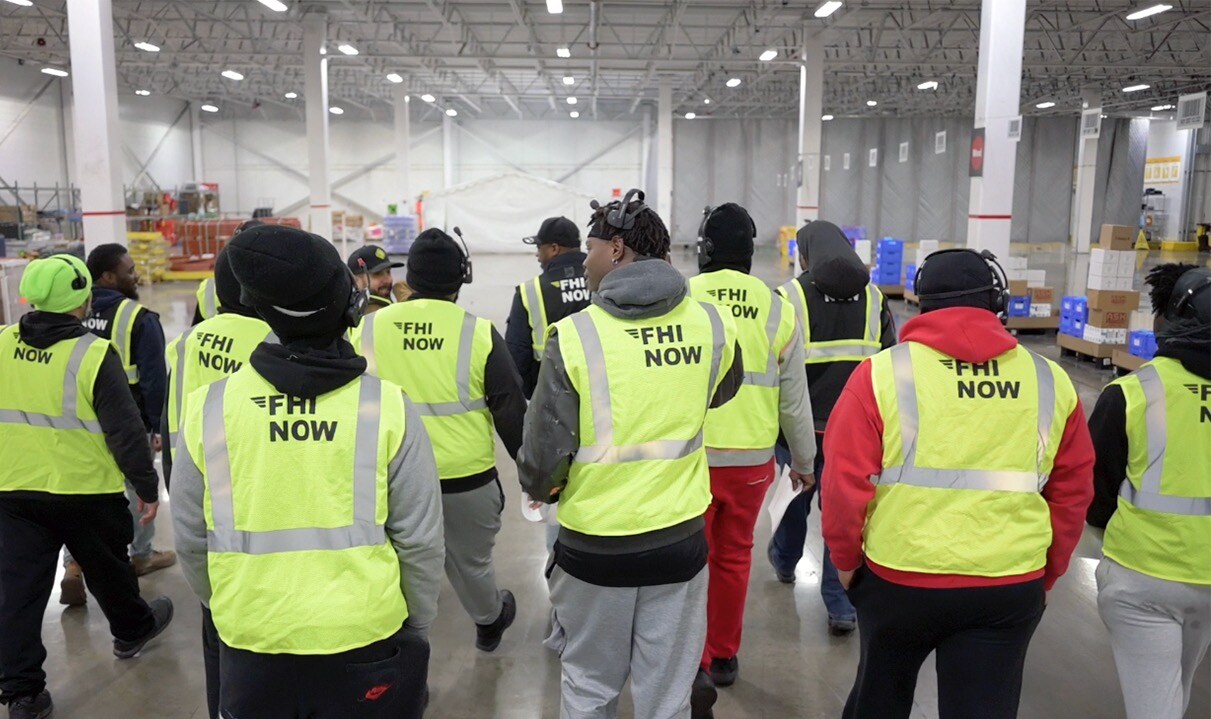
How FHI Enhances Supply Chain Efficiency
At FHI, we have a 30-year history of excellence in the logistics industry. We’ve partnered with countless clients and helped them deliver better results with lower costs. Our range of logistics solutions is tailored to problems like labor shortages, warehouse management, and seasonal volume spikes.
Our managed labor is highly experienced, professional, and compensated based on productivity. Not only do you get better results, but you can avoid expenses related to broken merchandise and injuries that are more likely from newly hired staff.
Strengthen Your Supply Chain With FHI
Thriving in today’s economy demands doing more with less and optimizing supply chain efficiency. Contact FHI today to discover how our on-demand labor can immediately improve your margins, reduce costs, and streamline your operations. Don’t let supply chain inefficiencies hold you back—let’s build a stronger future for your supply chain together.