
7 Ways Warehouse Labor Outsourcing Cuts Supply Risk
Discover how warehouse labor outsourcing helps grocery retailers and distributors reduce labor risk, protect product flow, and build a more resilient supply chain.

Discover how warehouse labor outsourcing helps grocery retailers and distributors reduce labor risk, protect product flow, and build a more resilient supply chain.
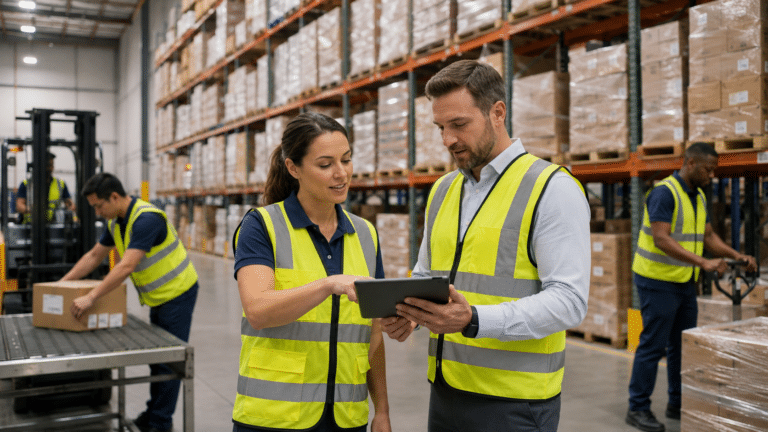
Learn how warehouse operations outsourcing helps companies improve labor productivity, safety, scalability, and accountability without giving up control of their facility.

Learn what warehouse labor outsourcing means in 2026, how it works, what it costs, and how managed labor improves warehouse productivity and flexibility.

Why are global companies expanding to the US? Explore how shifting tariffs, supply chain resilience, and operational strategy are driving the trend.

Avoid costly setbacks. Discover the most common first-year mistakes companies make when opening a U.S. distribution center—and how to prevent them.

Deciding how to run your first U.S. warehouse? Explore the pros and cons of self-operating, transitional, and fully outsourced distribution models.

Learn how to hire, onboard, train, and retain a reliable warehouse workforce when opening a first U.S. distribution center.

Learn how long a realistic US warehouse launch takes, from permitting and WMS setup to hiring, inbound freight, training, and outbound operations.

Learn how imported freight moves from a US port to a distribution center, including customs clearance, drayage, dwell time, and DC readiness.

Learn the US labor law basics international companies should consider before hiring employees and opening their first American distribution center.

Learn how professionally managed warehouse lumper services can improve unloading speed, labor consistency, dock visibility and inbound freight control.

Learn why focusing solely on labor costs can increase overall warehouse operating expenses and discover the metrics that drive true operational efficiency.